Water Therapy
Cold plunge, hot tub, and swim spa — the ultimate in water-based recovery and wellness.
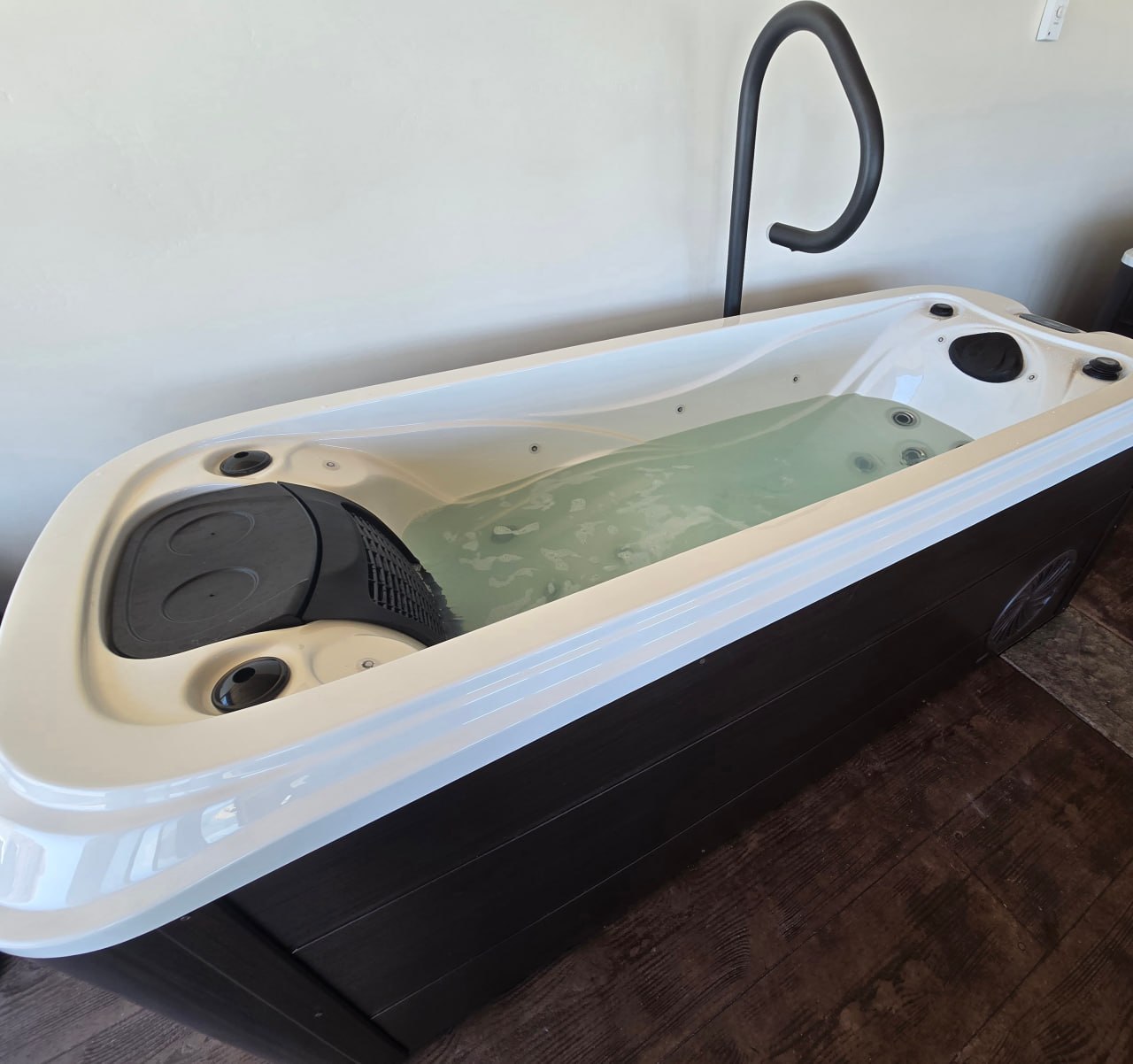
What is Cold Plunging or Cold Water Immersion:
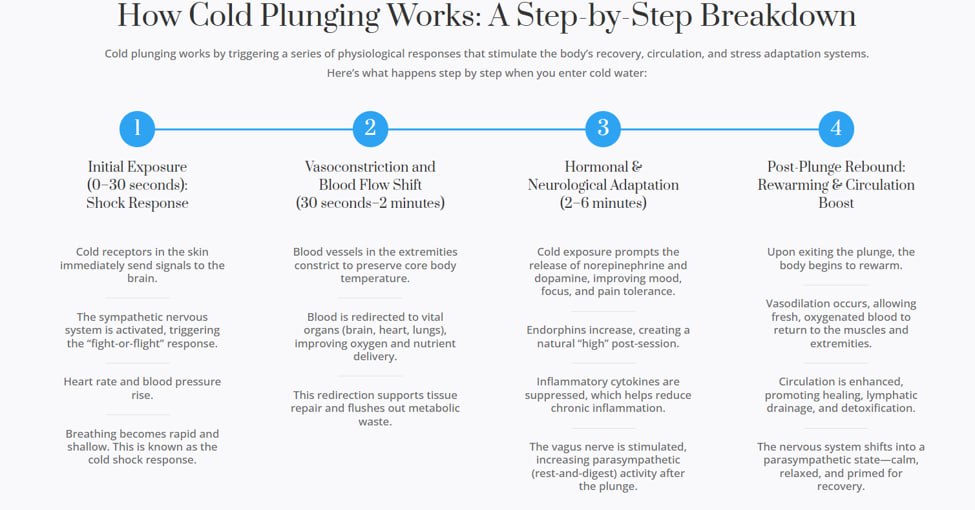
Cold plunging, also known as cold water immersion, is “essentially” one form of cryotherapy that is the practice of submerging the body in cold water significantly lower than the average body temperature. This temperature is typically between 49°F and 59°F for a short, controlled period of time. The sudden drop in temperature stimulates the body's natural healing mechanisms and promotes increased circulation, among other health benefits. This method has been used for centuries in both athletic recovery and wellness rituals, from ancient Roman baths to modern sports science. By exposing the body to cold temperatures, the nervous system is stimulated, blood vessels constrict (a process called vasoconstriction), and inflammation is reduced. After exiting the cold, the body rapidly warms back up triggering increased blood flow, endorphin release, and a boost to metabolic function.
Why Choose to Cold Plunge?
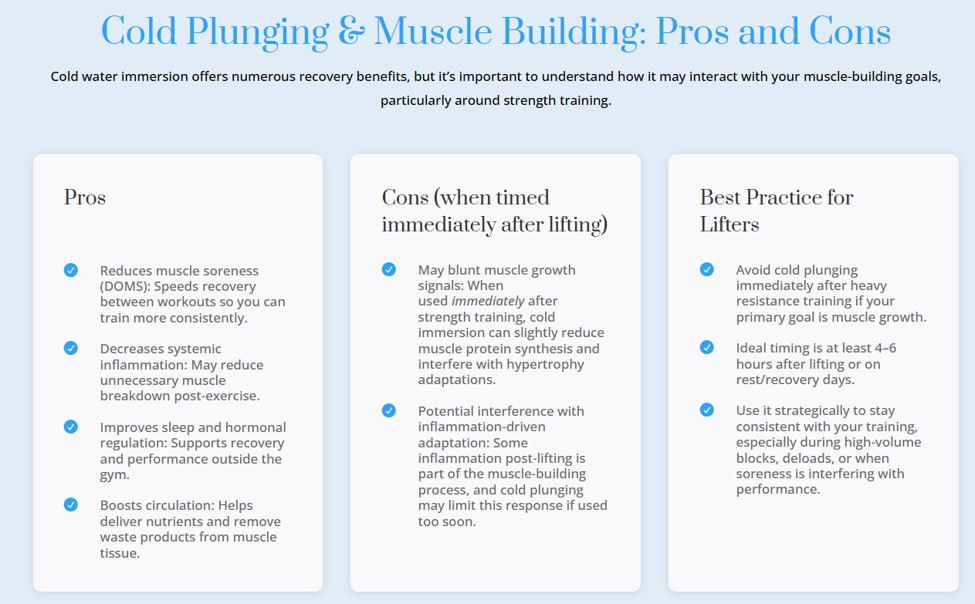
If you don't have an underlying condition, initial evidence suggests the practice may support the immune system, boost mood, heighten your focus, improve circulation, decrease inflammation, relieve pain, and increase muscle recovery making it a powerful tool for any wellness routine. Cold Plunging activates your body's natural recovery and regulation systems in just a few minutes. Cold Plunging induces hormesis, which is a beneficial stressor that forces the body to adapt, rebuild and regulate itself more effectively over time.
What are the benefits of Cold Plunging?
Why would anyone subject themselves to an icy plunge? A cascade of physiological responses occurs when the core body temperature decreases due to cold water exposure. Such adaptive mechanisms from just two to three minutes in a cold plunge offer numerous physical and mental benefits to promote overall health and vitality. It is not just for athletes—It's a recovery tool that supports a wide range of physical and mental concerns. Research points to quite a few possible physical and mental health benefits for managing chronic issues or to improve how you feel day-to-day.
How long to cold plunge safely?
Determining how often to engage in cold plunge therapy depends on various factors, including your goals, tolerance to cold exposure, and overall health. While there's no one-size-fits-all answer, there are some general guidelines.
Differences between Cold Plunge vs. Ice Bath vs. Cold Shower
- •Cold showers are typically from 55-65°F, providing mild to moderate cold that only hits the surface area and is great for mood, wakefulness and light resilience training, but limited impact on inflammation or muscle recovery.
- •Ice baths work and are typically from 32-60°F, but without circulation of water, they are inconsistent (warmer at the top and colder at the bottom) and harder to manage.
- •Cold Plunging with us maintained at 53-56°F, gives you precise temperature control, water circulation and full immersion, to activate the vagus nerve, boost circulation and support inflammation control. This is the most effective option for measurable cold exposure benefits.
How to Do a Cold Plunge?
There are many ways to do a cold plunge. The basic idea is to partially or totally submerge your body in cold water for a few minutes.
Dress appropriately in a swimsuit or athletic clothing (like shorts, a sports bra, and a t-shirt). Prepare yourself mentally and physically. Have a towel and dry clothes close by so you can warm up right after your plunge. Ready your mind for the discomfort that is coming and commit to your goal of getting into the cold water. When entering the water, it is recommended exhale (DO NOT hold your breath) and practice deep-breathing through the discomfort.
Start with a short one. Try 30 seconds to a minute. After a few plunges, you can train your body to stay in the cold water longer, working up to 5-10 minutes. You can also take breaks and do a few shorter dips in a row. While you're in the water, listen to your body. Your breathing may be irregular at first, but it should stabilize. If your breathing doesn't calm down, you start to feel lightheaded or dizzy, or you feel chest discomfort or pain, get out of the water. If your fingers or toes start to change color, get out right away and warm up to avoid frostbite or hypothermia.
When time is up, get out of water, dry off thoroughly with a towel and warm up as soon as you finish your plunge.
What to Expect
Cold Plunge FAQ's
Research Studies
- •For post-exercise fatigue and recovery: https://www.frontiersin.org/journals/physiology/articles/10.3389/fphys.2023.1006512/full
- •For Inflammation after Resistance Training: https://www.scielo.br/j/rbme/a/qb3SLBHXhmGdxQbYGJ7Qyhd/?format=html&lang=en
- •For effects on mood: https://pmc.ncbi.nlm.nih.gov/articles/PMC9953392/
- •For Health and Well-Being: https://journals.plos.org/plosone/article?id=10.1371/journal.pone.0317615